The Hidden Cost of High Functioning: Why So Many People Appear Fine While Privately Falling Apart
Discover how the SKC Framework™ helps people move from internal survival toward greater self-awareness, emotional understanding, and clarity.
Sukhi K Chatha
5/9/20266 min read
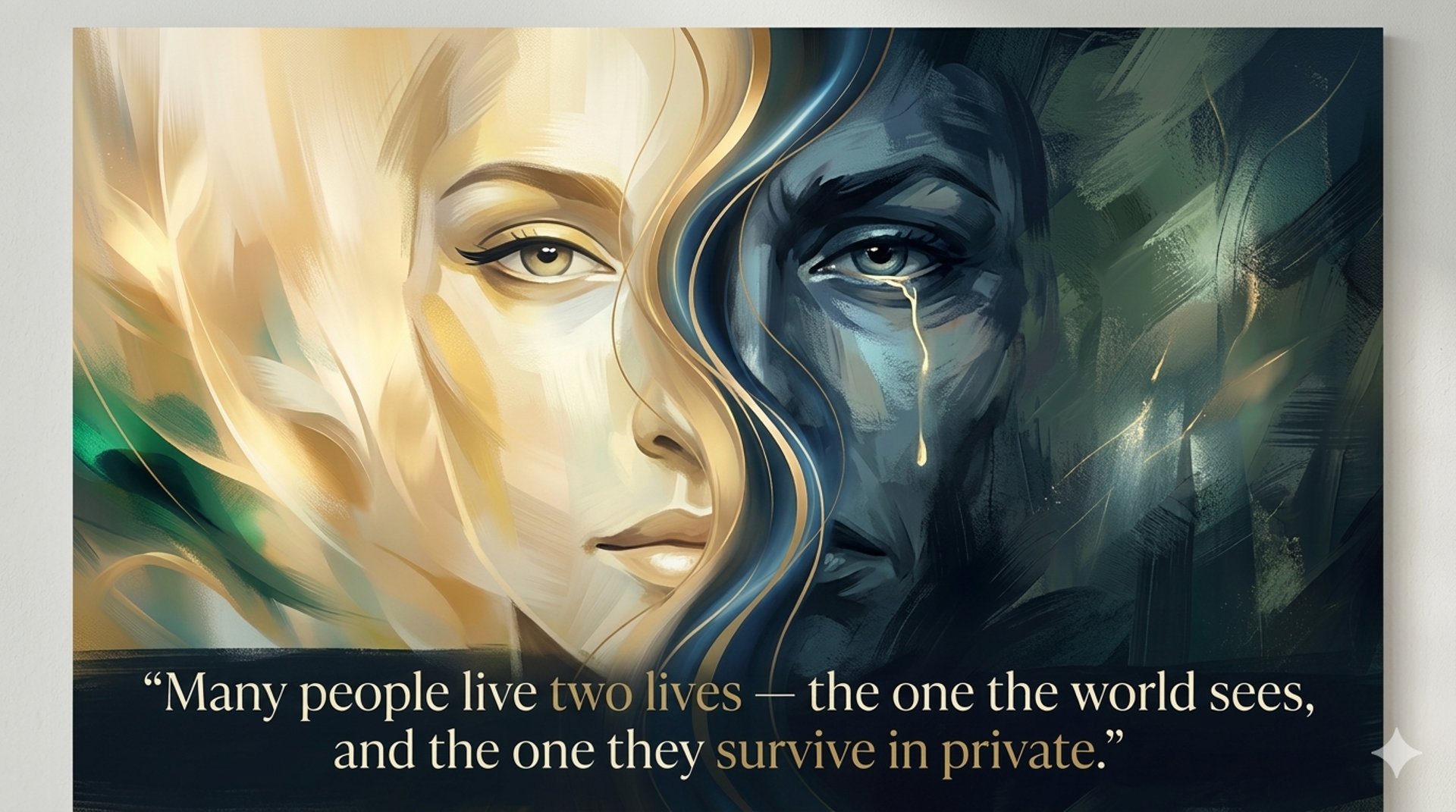
Functioning and wellbeing are not the same thing.
The Hidden Cost of High Functioning: Why So Many People Appear Fine While Privately Falling Apart
There are people who fall apart visibly. And then there are people who continue replying to emails, attending meetings, supporting others, showing up socially, and functioning well enough that nobody realises how exhausted they actually are.
Their lives still look intact from the outside.
They continue working.
Continue coping.
Continue smiling at the right moments.
Continue saying “I’m fine” automatically.
Yet internally, their mind rarely feels still.
The overthinking does not switch off. The pressure follows them into quiet moments, making rest feels unfamiliar. Even relaxation can feel uncomfortable because the mind has become so conditioned to tension that slowing down feels almost unsafe.
Many people live this way for years. Not because they are weak or incapable. But because they have become highly skilled at functioning while privately disconnected from themselves.
This is one of the defining emotional struggles of modern life. And it often goes unnoticed precisely because the person experiencing it still appears functional.
“The most exhausted people are often the ones nobody thinks to ask about.”
High-functioning emotional struggle is difficult to recognise because it rarely looks dramatic. There may be no visible breakdown. No crisis obvious enough for other people to intervene. No external collapse that signals something is wrong.
Instead, the struggle often hides beneath competence. The person becomes known as:
reliable
calm
responsible
emotionally steady
productive
supportive
Yet internally, they may feel:
mentally crowded
emotionally disconnected
deeply overwhelmed
trapped in constant self-monitoring
unable to fully relax
exhausted by their own mind
Over time, many people become so accustomed to carrying internal pressure that they stop questioning it altogether.
Stress becomes personality.
Overthinking becomes identity.
Emotional suppression becomes normal.
This is where the gap between the public self and private self quietly begins to widen. And the larger that gap becomes, the more psychologically exhausting life often feels.
The Performance of Stability
One of the most overlooked forms of emotional exhaustion is performed stability. This is when someone learns how to appear emotionally functional regardless of what they are carrying internally.
They become skilled at:
minimising their struggles
staying emotionally composed
managing other people’s perceptions
suppressing vulnerability
continuing despite exhaustion
prioritising responsibility over emotional honesty
Many people develop this pattern early.
Sometimes through family dynamics.
Sometimes through cultural expectations.
Sometimes through environments where emotional needs were ignored, criticised, or unsafe to express openly.
Over time, survival becomes adaptation. The person unconsciously learns:
“As long as I keep functioning, nobody will realise how much I’m struggling.”
The problem is that functioning and wellbeing are not the same thing.
A person can be:
successful and emotionally exhausted
socially active and deeply lonely
outwardly confident and internally self-critical
productive yet psychologically overwhelmed
The modern world often rewards this kind of emotional self-abandonment. People praise resilience while ignoring the cost of constantly surviving internally. But eventually, the mind and body begin responding to the pressure.
Sometimes through anxiety.
Sometimes through burnout.
Sometimes through emotional numbness.
Sometimes through relentless overthinking that never fully quietens.
And sometimes through a deep sense of disconnection from oneself that is difficult to explain to anyone else.
SELF — Recognising The Hidden Gap
The first stage of the SKC Framework™ is SELF.
Not self-improvement.
Not performance optimisation.
Not becoming a different person.
Self-awareness.
Because many people spend years responding automatically to pressure without fully understanding themselves underneath it.
They know how to function. But they no longer know how they genuinely feel. They can explain their responsibilities in detail but struggle to explain their emotional reality honestly. This often shows up subtly.
Someone may:
constantly replay conversations afterwards
overanalyse decisions
struggle to switch off mentally
feel guilty resting
feel emotionally responsible for everyone else
avoid disappointing people at all costs
lose connection with their own needs entirely
Externally, these behaviours can appear responsible or driven. Internally, they are often connected to fear, pressure, emotional conditioning, or chronic self-protection.
The SELF stage within the SKC Framework™ focuses on recognising these hidden patterns more honestly. Because awareness changes the way people relate to themselves.
Many people are not lacking intelligence. They are lacking space to hear themselves underneath the mental noise.
“You cannot create clarity inside a life built entirely around emotional survival.”
The moment people begin recognising the gap between:
who they appear to be externally
andwhat they privately carry internally
something important begins shifting. Not because everything suddenly becomes easier. But because awareness interrupts automatic survival patterns. And often, that is where genuine change begins.
KNOWLEDGE — Understanding The Patterns Beneath The Pressure
Most people analyse their thoughts repeatedly. Far fewer understand the emotional patterns underneath them. This is where the second stage of the SKC Framework™ becomes important: KNOWLEDGE.
Because emotional exhaustion rarely appears without history.
Overthinking usually has roots.
People pleasing usually has roots.
Chronic self-pressure usually has roots.
Many behaviours that people criticise themselves for are actually adaptive responses developed over time.
The person who struggles to rest may have learned early that their value came from productivity.
The person who constantly monitors other people’s moods may have grown up in emotionally unpredictable environments.
The person who appears highly independent may have learned long ago that vulnerability felt unsafe.
Without understanding these patterns, people often stay trapped in cycles of self-blame.
They think:
“Why can’t I just switch off?”
“Why do I overthink everything?”
“Why do I always feel emotionally responsible?”
“Why am I so hard on myself?”
“Why do I feel exhausted even when life looks fine?”
But these patterns rarely exist randomly. Human behaviour is often far more psychologically connected than people realise. The mind creates strategies to survive pressure long before people consciously recognise what they are doing. And unfortunately, many of those strategies continue operating long after they stop serving us.
This is why surface-level advice often fails. Telling someone to:
“just relax”
“stop overthinking”
“set boundaries”
“think positively”
without understanding the deeper emotional mechanisms underneath the behaviour often creates frustration rather than change.
Because insight matters. Not intellectual insight alone. Emotional insight.
The kind that helps people finally recognise:
what they are protecting themselves from
what fears are driving their reactions
what emotional needs have been neglected
what identity patterns are quietly controlling their life
“Many people are not overreacting. They are over-adapting.”
This stage of the SKC Framework™ is not about endlessly analysing every thought or emotion. It is about accurate self-understanding. Because when people understand themselves more honestly, they often stop viewing themselves as broken.
Instead, they begin recognising the emotional logic behind behaviours that once felt confusing or shameful. And that changes the relationship they have with themselves entirely.
CLARITY — Moving Beyond Constant Internal Survival
The final stage of the SKC Framework™ is CLARITY.
Not perfection.
Not emotional invulnerability.
Not becoming endlessly calm or positive.
Clarity is quieter than that. It is the gradual reduction of internal noise.
It is what begins happening when:
overthinking loses some of its control
emotional reactions become more understood
pressure stops driving every decision
self-awareness becomes stronger
emotional self-trust starts returning
Many people spend so long living in survival mode that they forget what internal steadiness even feels like.
Their nervous system becomes accustomed to tension.
Their identity becomes built around coping.
Their worth becomes tied to performance.
Clarity begins challenging that.
Slowly.
Often subtly at first.
Someone notices they no longer replay every interaction for hours afterwards.
Someone realises they are no longer abandoning themselves emotionally to keep everyone else comfortable.
Someone begins recognising the difference between genuine responsibility and learned emotional over-responsibility.
Someone stops needing external validation to feel psychologically secure.
These shifts are rarely dramatic from the outside. But internally, they can feel life-changing. Because clarity is not simply about feeling better. It is about feeling more connected to yourself again.
“Healing is not always loud. Sometimes it looks like finally feeling at home inside your own mind.”
The modern world encourages people to optimise constantly.
To improve constantly.
Achieve constantly.
Perform constantly.
But very few people are ever taught how to understand themselves properly.
Very few are taught how emotional conditioning shapes behaviour.
How survival patterns influence identity.
How internal pressure quietly changes the way people think, relate, and live.
This is why so many high-functioning individuals privately feel exhausted despite appearing successful externally. They have learned how to survive. But not how to stop surviving and living. And there is a difference.
The Hidden Cost Of Living Two Lives
One of the most painful experiences many people carry privately is the feeling of emotional separation from themselves.
The sense that:
the world knows the functioning version of them
butvery few people know the exhausted version underneath
Over time, this creates loneliness that is difficult to describe. Not because people are physically alone. But because they no longer feel fully seen. They become trapped between:
maintaining the image
andacknowledging the emotional reality underneath it
This is the emotional territory the SKC Framework™ was created to explore.
Not through surface-level positivity. Not through performance-based self-development. But through:
self-awareness
emotional understanding
behavioural insight
psychological clarity
emotional self-trust
Because the goal is not to become someone else.
The goal is to feel less lost from yourself.
Closing Reflection
Many people spend years learning how to function. Very few are ever taught how to understand themselves. The SKC Framework™ exists to help close the gap between:
the public self people perform externally
andthe private self they quietly survive within internally
Because clarity rarely begins with pretending everything is fine. It usually begins the moment someone finally stops ignoring what they have been carrying alone for far too long.
Call To Action
If you recognise yourself in these patterns, the issue may not be that you are failing to cope. It may be that you have spent years surviving internally without fully understanding the pressure underneath it. The SKC Framework™ was developed to help people explore that hidden space more honestly through:
self-awareness
emotional understanding
psychological insight
behavioural clarity
Explore the SKC Framework™ or book a private consultation to begin understanding the patterns behind the pressure more clearly.